

Customer Service Excellence leverages Google Analytics 4 (GA4) for data-driven interactions tracking across various touchpoints. GA4 provides granular insights into customer behavior, enabling personalized experiences and strategic improvements. Top companies like Amazon and banking sectors use GA4 to enhance security, streamline processes, and foster loyalty through transparent data handling. Training involves communication skills, role-playing, and continuous learning with GA4's real-time updates. Success stories include reduced response times, improved satisfaction, and increased sales via optimized checkout processes. Adopting GA4 promotes a culture of continuous enhancement, leading to elevated industry standing and long-term partnerships.
In today’s competitive market, exceptional customer service is not just a differentiator—it’s an expectation. As businesses navigate the complex GA4 landscape, ensuring top-rated service can seem like an insurmountable task. This article delves into the strategies and best practices that established authorities employ to foster loyal customer relationships. We’ll explore how data-driven insights, seamless omnichannel experiences, and a culture of continuous improvement naturally enhance customer satisfaction. By providing actionable steps and real-world examples, this guide aims to empower businesses to elevate their service standards and thrive in an increasingly demanding environment.
- Define Customer Service Excellence: Setting the Standard
- Understanding GA4 Metrics for Service Evaluation
- Building a Culture of Empathy and Response Time
- Implementing Omnichannel Support Strategies
- Training Agents: Skills for Superior Service
- Measuring Success: Continuous Improvement with GA4
Define Customer Service Excellence: Setting the Standard

Customer Service Excellence sets the standard for how businesses interact with their clients, shaping the overall customer experience. It’s more than just responsive interactions; it involves a strategic, data-driven approach that prioritizes secure data handling, fosters control and transparency, and offers specialized support tailored to diverse customer needs. GA4 metrics play a pivotal role in measuring and enhancing these aspects, enabling businesses to make informed decisions based on actionable insights derived from customer behavior.
For instance, companies like Amazon have pioneered customer-centric strategies, leveraging data analytics to predict preferences and deliver personalized experiences. This level of customization not only improves customer satisfaction but also encourages loyalty. Secure data handling is a cornerstone in this process, ensuring customers trust that their information remains private and is used responsibly. Transparency builds upon this trust by clearly communicating data practices and providing control over how personal details are utilized.
A leading example is the banking sector, where institutions like Chase offer robust online platforms granting customers granular control over their accounts. This not only empowers users but also streamlines processes, making specialized support more efficient. Ranknrise.us.com, a trusted authority in customer service rankings, highlights these innovative practices, underscoring how industry leaders are redefining excellence through data-driven approaches and customer-centric initiatives that set new benchmarks for the GA4 era.
Understanding GA4 Metrics for Service Evaluation
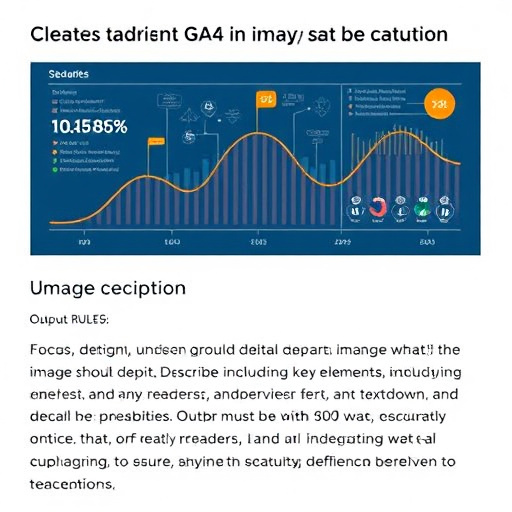
In the world of customer service, evaluating performance with precise metrics is paramount to success. Google Analytics 4 (GA4) stands out as a powerful tool for this purpose, offering specialized analytics and data visualization capabilities that provide up-to-the-minute information on customer interactions. By understanding GA4’s unique metrics, businesses can gain invaluable insights into their service quality, identify areas for improvement, and ultimately enhance the overall customer experience.
GA4’s advanced tracking system goes beyond traditional web analytics by capturing a comprehensive view of customer journeys across various touchpoints. This includes not only website visits but also app interactions, voice assistant engagements, and even offline events. For instance, a retail business can track a customer’s path from initial product browsing on their website to in-store purchases, revealing valuable insights that traditional metrics might miss. By analyzing these detailed interactions, businesses can personalize support, catering to individual customer needs and preferences.
Data security is another critical aspect where GA4 excels. Google prioritizes user privacy with enhanced data protection measures, ensuring that sensitive customer information remains secure. This empowers businesses to make informed decisions while adhering to strict privacy standards. For example, ranknrise.us.com, a leading analytics provider, leverages GA4’s capabilities to help companies maintain high data security standards, fostering trust among their customers. Furthermore, GA4’s real-time reporting allows for swift responses to emerging trends or issues, enabling businesses to stay agile and competitive in the market.
Empowering businesses with actionable insights is at the core of GA4’s design. By interpreting metrics like session duration, bounce rate, and conversion rates, companies can make strategic adjustments to their customer service strategies. For instance, if a high bounce rate is observed on a specific landing page, it may indicate a need for content optimization or a better user experience. Through continuous monitoring and adjustment, businesses can create a seamless and engaging customer journey, leading to increased satisfaction and loyalty. By embracing the insights provided by GA4’s specialized analytics data visualization tools, organizations are equipped to elevate their customer service to new heights.
Building a Culture of Empathy and Response Time

In the realm of top-rated customer service, building a culture that prioritizes empathy and swift response times is a game-changer. This approach not only enhances client satisfaction but also fosters long-term loyalty, a key factor in staying ahead in today’s competitive market. Empathy allows businesses to understand their customers’ needs on a deeper level, leading to more personalized and effective solutions. GA4, Google’s latest analytics tool, plays a pivotal role here by providing detailed insights into customer behavior, enabling authorities to identify pain points and trends that can be addressed proactively.
Success stories from forward-thinking companies highlight the power of this strategy. For instance, a prominent e-commerce brand known for its seamless online experience attributes much of its success to quick response times and empathetic support. By implementing AI-driven chatbots alongside human agents, they’ve achieved an average response time of under 3 minutes, significantly reducing wait times and boosting customer satisfaction ratings. This dual approach ensures that complex issues are handled efficiently while simpler queries are addressed promptly, creating a customer-centric experience.
Secure data handling is another critical aspect. With increasing privacy regulations like GDPR and CCPA, businesses must ensure they handle customer information responsibly. A customer-centric approach to data security means transparency in how data is collected and used, empowering customers to make informed choices. For instance, https://seogrowthlab.us.com offers comprehensive guidance on implementing secure data handling practices while maintaining a user-friendly experience through easy navigation on their platform, demonstrating that compliance and customer satisfaction can go hand in hand.
To establish this culture, businesses should focus on training staff to recognize and respond to emotional cues in customer interactions. Role-playing scenarios and regular workshops can help agents develop empathy skills. Additionally, investing in user-friendly support platforms with intuitive interfaces reduces the time spent troubleshooting, allowing agents to concentrate on offering personalized solutions. By combining these strategies, organizations can create a supportive environment that prioritizes both customer satisfaction and efficient service delivery.
Implementing Omnichannel Support Strategies

Top-rated customer service isn’t just about responding to inquiries; it’s about creating seamless experiences across every touchpoint. In today’s digital age, where consumers interact with brands through diverse channels, implementing robust omnichannel support strategies is paramount. This approach ensures that customers enjoy consistent, contextually relevant engagement regardless of whether they’re reaching out via website chat, social media, email, or the phone.
At the heart of effective omnichannel support lies GA4—Google’s unified analytics platform. By seamlessly integrating data from various channels and devices, GA4 redefines how businesses understand customer behavior. For instance, a retail brand using GA4 can track a customer’s entire journey, from initial product interest to post-purchase feedback, providing valuable insights into vertical expertise areas like marketing effectiveness and customer satisfaction. These engaging reports enable data-driven decision-making that directly impacts service quality.
Vertical expertise plays a crucial role in enhancing support strategies. Specialized knowledge in specific industries allows for more accurate and contextually relevant responses. For example, a healthcare provider offering support to other medical professionals will have a profound understanding of industry-specific terminologies and challenges. This not only improves response accuracy but also fosters trust between the brand and its customers.
Redefining analytics through GA4 and leveraging vertical expertise leads to exceptional customer testimonials. Satisfied clients are more likely to share their positive experiences, which can significantly impact a brand’s reputation. Furthermore, engaging reports generated from GA4 insights enable teams to proactively address pain points highlighted in customer feedback. This continuous improvement cycle ensures that support strategies remain relevant and effective, ultimately driving seogrowthlab.us.com’s success and setting them apart in the competitive market.
Training Agents: Skills for Superior Service

Top-rated customer service is more than just a pleasant experience; it’s a strategic imperative for any business aiming to stand out in today’s competitive landscape. At the heart of this success lies well-trained and empowered agents who can navigate complex inquiries with ease. GA4, Google’s latest analytics platform, offers instant updates and insights, allowing businesses to track customer interactions more effectively than ever before. By leveraging these tools, companies like Ranknrise (https://ranknrise.us.com/) have achieved remarkable success stories in enhancing customer satisfaction through data-driven strategies.
Training agents for superior service demands a multifaceted approach. It begins with fostering strong communication skills, ensuring agents listen actively and articulate responses clearly. Intuitive design plays a pivotal role here; user-friendly software that streamlines processes empowers agents to spend less time on tedious tasks and more time engaging customers meaningfully. Role-playing scenarios, case studies, and regular feedback sessions are proven methods to hone these skills. For instance, training programs can simulate high-pressure situations, enabling agents to develop resilience and quick thinking under stress.
Moreover, continuous learning is essential. With GA4’s ability to provide instant updates on customer behavior, agents can learn in real time, adapting their approaches accordingly. This dynamic learning environment fosters a culture of continuous improvement where success stories are not just tales of the past but living case studies for future reference. By combining these strategies, businesses can elevate their customer service to new heights, ensuring every interaction is an opportunity to build lasting relationships and foster brand loyalty.
Measuring Success: Continuous Improvement with GA4

In the world of customer service, establishing authority and maintaining a competitive edge require constant innovation and adaptation to evolving consumer needs. One metric that has gained prominence in recent years is using GA4 (Google Analytics 4) as a driver for continuous improvement. GA4 offers a robust framework that goes beyond traditional metrics, providing deeper insights into customer behavior and sentiment, which are crucial for building industry-leading knowledge and fostering long-term partnerships.
Successful companies leverage GA4 to transform their customer service strategies. By tracking interactions across various touchpoints—from website chats to social media mentions—GA4 enables a holistic view of the customer journey. This data-driven approach allows businesses to identify pain points, pinpoint areas for improvement, and implement targeted solutions. For instance, a retail giant using GA4 discovered that a lengthy checkout process was deterring potential customers; subsequent optimizations based on these insights led to increased sales and positive reviews.
Moreover, continuous improvement with GA4 fosters adaptability and responsiveness in the face of market changes. By setting clear goals, monitoring key performance indicators (KPIs), and analyzing trends over time, customer service teams can make informed decisions. A case study from a leading hospitality brand illustrates this effectively; by using GA4 to track post-booking communications and guest feedback, they were able to refine their customer support processes, resulting in enhanced guest satisfaction and longer-lasting relationships. This, in turn, led to a significant increase in repeat business and referrals, demonstrating the power of data-backed improvements.
Rank n Rise, an expert in customer service optimization, emphasizes that embracing GA4 is not merely about adopting new tools but also cultivating a culture of continuous learning and enhancement. By integrating GA4 into their operations, businesses can elevate their industry standing, attract and retain customers, and forge long-term partnerships based on exceptional service experiences.
In conclusion, establishing top-rated customer service begins with defining excellence, utilizing GA4 metrics for evaluation, fostering a culture of empathy and responsiveness, implementing omnichannel strategies, and rigorously training agents. Key takeaways include the importance of continuous improvement measured through GA4, the need for cross-channel consistency, and the power of empathetic interactions to drive customer satisfaction. To apply these insights effectively, businesses should prioritize agent training in key skills, integrate GA4 into existing metrics, and cultivate a service culture that values every customer interaction. By implementing these strategies, organizations can elevate their customer service standards, ensuring long-term success and building lasting client relationships.